As your smart home grows, managing multiple devices can become challenging without a central control system. Smart home hubs solve this problem by connecting and coordinating devices, making it easier to control everything from one place.
For beginners, choosing the right hub can simplify automation and improve how different devices work together. This guide will help you understand what to look for and how to select the best smart home hub for your needs.
Why Smart Home Hubs Are Worth It
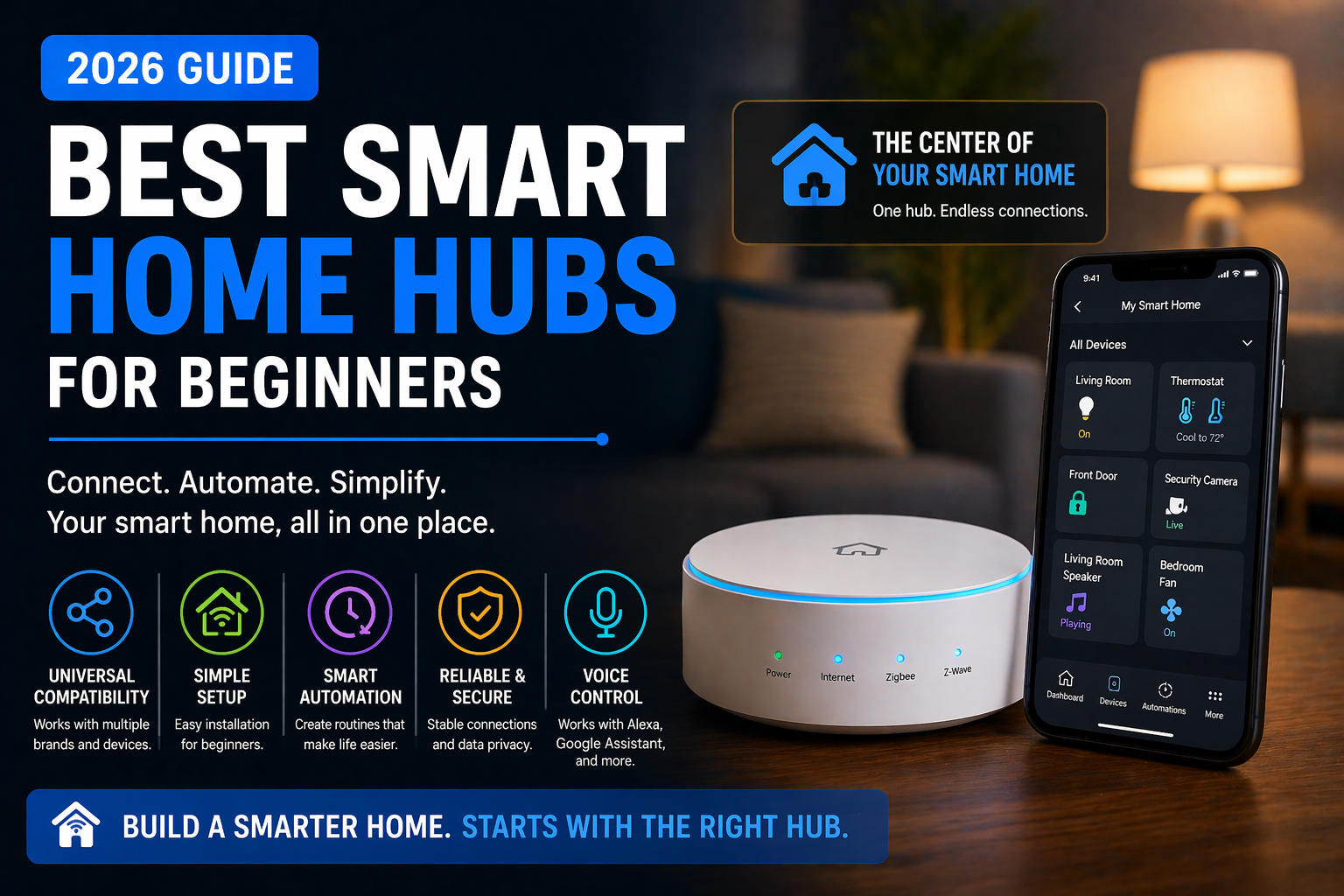
Smart home hubs act as the “brain” of your connected home, allowing devices from different categories to communicate. Instead of switching between apps, you can manage everything through one interface.
Hubs integrate devices across Smart Lighting, Security & Surveillance, Temperature & Climate Control, and Entertainment & Audio, making them essential for larger smart home setups.
Key Features to Look For
Device Compatibility
The most important factor is compatibility. Make sure the hub works with the devices you already have or plan to add.
Ease of Use
Beginner-friendly hubs should offer simple setup and an intuitive interface for managing devices.
Automation Capabilities
Look for hubs that allow you to create routines, such as turning off lights, adjusting temperature, and locking doors automatically.
Voice Assistant Integration
Many hubs work with Smart Speakers, allowing you to control your home using voice commands.
Best Smart Home Hubs for Beginners
1. All-in-One Smart Home Hubs
These hubs support multiple device types and are ideal for users who want a single platform to manage everything.
2. Voice Assistant-Based Hubs
Some smart speakers double as hubs, combining voice control with smart home management.
3. App-Based Smart Hubs
App-based hubs focus on mobile control, offering flexibility and ease of use without additional hardware complexity.
How Smart Home Hubs Fit Into Your Setup
Smart home hubs connect devices across your home, allowing them to work together efficiently. For example, a hub can trigger Smart Lighting to turn off, activate Security & Surveillance systems, and adjust Temperature & Climate Control settings when you leave home.
This level of coordination improves convenience and creates a more seamless smart home experience.
Common Mistakes to Avoid
- Choosing a hub that doesn’t support your devices
- Adding too many devices at once
- Overcomplicating automation routines
Frequently Asked Questions
Do I need a smart home hub to get started?
No, many devices work independently. A hub becomes useful as your system grows.
Can a hub connect different types of devices?
Yes, hubs are designed to connect and coordinate multiple device categories.
Are smart home hubs easy to use?
Most modern hubs are designed with simple interfaces and guided setup processes.
Are smart home hubs worth it?
For larger or expanding smart homes, hubs provide better control and improved automation.
Smart home hubs make it easier to manage and automate your connected devices. By choosing a beginner-friendly option and expanding gradually, you can build a smart home system that is both efficient and easy to use.